
Wolf-OS
Linux Platform — Your Code, Our HardwareOpen Linux platform for the Wolf Gateway. Clean drivers, build system, safe-update bootloader, and expansion-card auto-detection. Mount your application on top.
Why Wolf-OS
Clean Linux Environment
Drivers, networking, and core services are handled. You focus on your application. Mount your code on top of a stable, tested foundation without wrestling with kernel drivers, GPIO configuration, or network stack setup.
Customizable Build System
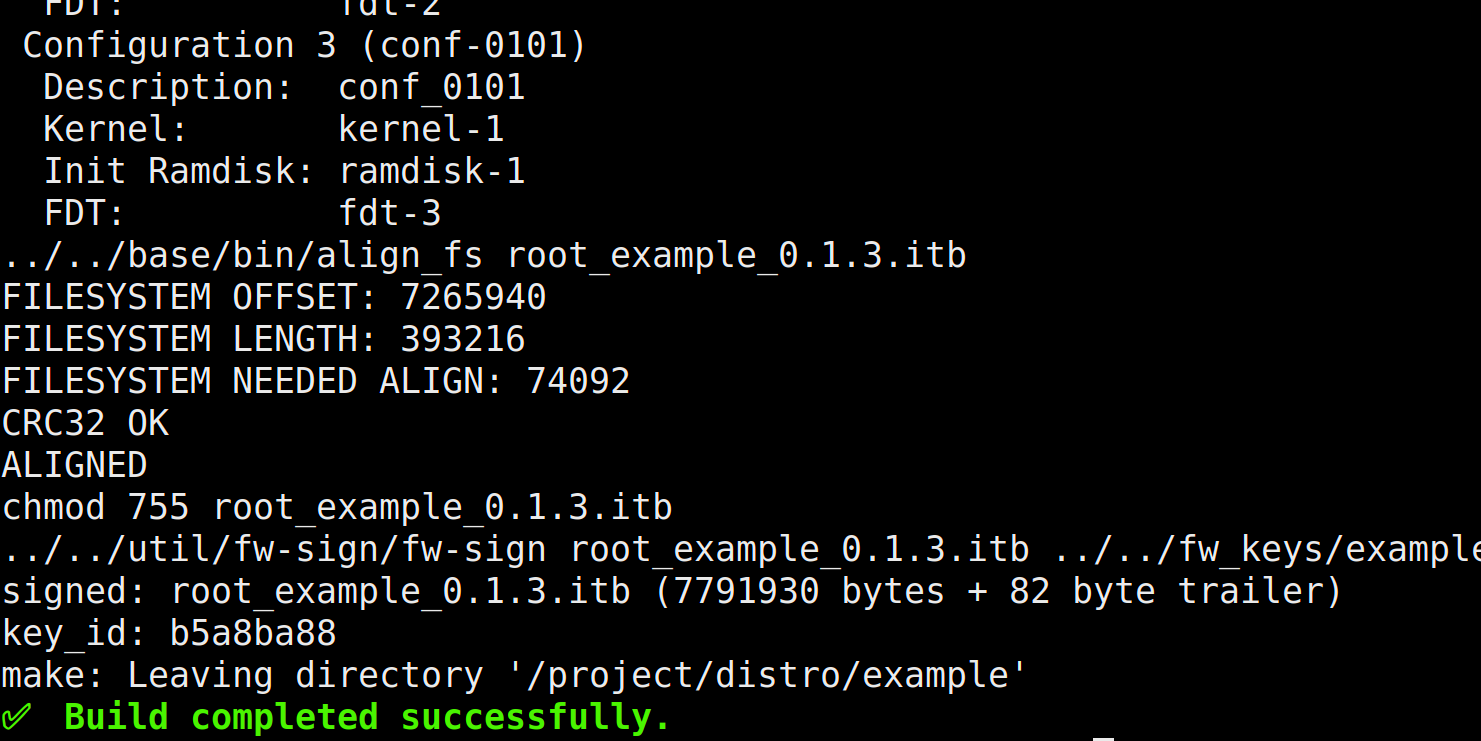
Choose which packages to include, add your software, and produce a full firmware image. The build system is open and documented. Add your libraries, strip out what you don't need, and produce a minimal image optimized for your use case.
Lean Firmware Image
A complete firmware image is around 8 MB compressed. Full updates push cleanly over LTE, NB-IoT, or any constrained link — no need to plan around metered-data caps.
Safe Updates
A bad image won't brick a remote device. The firmware writer rejects unsigned builds, and the bootloader falls back to the previous image automatically if a new one fails to start.
Hardware Auto-Detection
Each expansion card carries an EEPROM with its identity. One firmware image supports all Wolf Gateway variants — the OS detects which card is present at boot and configures the appropriate drivers and I/O mappings automatically.
OEM & Whitelabel Ready
Wolf-OS is the bring-your-own-firmware platform — by default, the end product carries your brand, not FoxIoT's. Custom expansion cards, custom hardware variants, and labelling support available for OEM partners.
What Integrators Build on Wolf-OS
Energy Market & VPP
European VPP, flexibility-market, and BESS integrators deploy Wolf-OS at the field-controller layer. The platform receives dispatch signals from their market systems over MQTT or Modbus and executes them on inverters, batteries, and grid equipment with local automation as the fallback.
Smart Marine Equipment
Wolf-OS runs custom smart buoys built by marine-tech integrators — environmental sensors, GPS, cellular telemetry, on integrator-built expansion cards. The same platform also runs as a subsystem controller aboard autonomous-navigation vessels, handling sensor I/O and feeding telemetry to a main onboard computer.
Building Energy Optimization
Energy-services companies use Wolf-OS as the on-site gateway for their building-monitoring platforms. With a custom expansion card built for their sensor mesh, the controller aggregates environmental and meter data, integrates with existing BMS systems, and drives AI-based HVAC control back to the equipment.
Smart Commercial Appliances
A past project embedded Wolf-OS inside commercial dishwashers built for restaurant kitchens. The controller monitored machine health and detergent levels in real time — letting the operator's back-end schedule detergent restocks before they ran out and dispatch technicians who arrived with the right parts already in the van.
Wolf-OS is a Linux platform — what gets built on it depends on what the integrator brings. The examples above are a snapshot of deployments today.
Setup & First Boot
Step-by-step guide on GitHub: cloning the repo, building your first firmware image, flashing the device, and verifying boot.
Open the Wolf-OS getting-started guide on GitHub →
Open Source
Source code, build instructions, and issue tracker live on GitHub:
github.com/FoxIoT-EU/foxiot-wolf-os
Pull requests welcome. The build system, kernel patches, drivers, and example applications are all in the repo. License terms in each subdirectory.
Developer Reference
| Parameter | Value |
|---|---|
| Languages | C, C++, Rust, Python, Lua, Shell |
| Kernel | Linux 6.12 LTS (supported until December 2028) |
| Bootloader | FoxIoT proprietary bootloader — FIT image validation, A/B failsafe |
| GPIO | 31 pins: UARTs, SPI, CAN, I2C, and more |
| Base OS | BusyBox — read-only rootfs with RAM overlay |
| Package Manager | None — build system bundles precompiled binaries into a firmware image |
| Update Channel | FIT firmware bundle, validated by the bootloader |
Compatible Hardware
Wolf-OS runs on the standard Wolf Gateway expansion-card variants. The same firmware image detects the connected card at boot and configures the appropriate I/O.
Wolf-3Oi3Ro
3× Relay 3 Opto-Iso DI RS-485
3 Omron relays, 3 opto-isolated digital inputs, RS-485 Modbus RTU.
Wolf-8ADio1Ro
8 Multifunction I/O Relay RS-485
8 multifunction I/O ports + 1 relay. Sensors, HVAC, mixed-signal.
Wolf-2RS485
2× RS-485 Independent baud
2 independent RS-485 ports. Multi-device Modbus, protocol bridging.
Wolf-2DALI
2× DALI-2 buses Custom MCU code required
Two DALI-2 lighting buses with on-board bus power. Wolf-OS support requires the integrator to write their own DALI driver — MCU communication docs available on request.
Compliance & Security
Product security information is published per the EU Cyber Resilience Act (Regulation 2024/2847).
| Document | Audience | Format |
|---|---|---|
| Product Security Information (CRA-UI-001) | Standard Wolf Gateway firmware | PDF ↓ |
| Firmware Releases | Signed Wolf-App firmware images | Index → |
| Older versions | Superseded revisions of the documents above, kept for ten years | Archive → |
Vulnerabilities → security@foxiot.eu. See the coordinated disclosure policy.
Documentation
Hardware setup and first-boot guides for the Wolf Gateway platform live in the FoxIoT documentation.
Open the Wolf Gateway documentation →
Related Products
Wolf-App
Ready Automation
Wolf-App is the ready-to-deploy automation firmware for the same hardware — MQTT, Modbus, REST, and a local rule engine, configured from a browser.
Wolf Gateway Family
Hardware Modular
Pick the expansion card that matches your project. Wolf-OS runs on all of them.
Ready to Build on Wolf-OS?
Start with the GitHub repository — or contact us for hardware access, build support, and OEM/whitelabel options.